FAST
FACTS
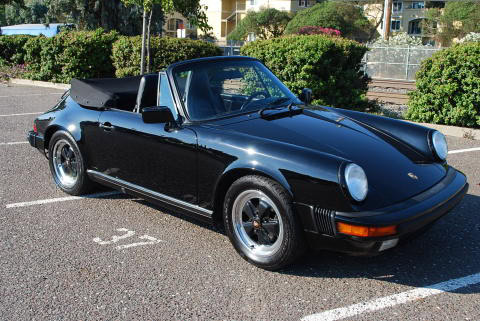
- The 3.2L was introduced on the 1984 Carrera, replacing the old 3.0L unit. The bump in displacement was achieved by using the crankshaft and connecting rods from the 3.3L 911 Turbo while maintaining the bore spacing of the old 3.0L
- The 3.2L also lacked the timing chain issues of the previous 3.0L SC thanks to superior chain tensioner oiling. These tensioners are pressure-fed oil to maintain lubrication and reduce wear, unlike the sealed-type tensioners that would fail on the 3.0L SC
- These engines came with no head gaskets – instead, the sealing surfaces of the cylinder bore and cylinder head were cut at an angle and clamped together. The gasket-less design continued into the following generation 911 (964)
- With no oil leak problem, faultless timing chain tensioner design, and superb G50 5 speed transmission, it’s clear why 1987-1989 Carreras are quite desirable
- 1987+ 3.2 Carrera’s feature the updated G50 5 spd gearbox (replacing the old 915 gearbox). The G50 offers many improvements (and some disadvantages) when compared to the 915 and is considered easier to live with everyday. To some degree, it can better cope with spirited driving (such as hard launches)
- The Getrag G50 5spd benefited from a hydraulically actuated clutch instead of the 915’s cable setup (new clutch is 15mm larger). The G50 also receives a gear selector centering spring for neutral, and the shifter has a better defined gate (the 915 gate was a bit more vague)
- In regards to shift feel, the G50 featured a new Borg-Warner synchromesh in place of the 915’s “balk ring” synchromesh, which made for smoother shifting. The balk ring synchromesh requires more friction to operate smoothly than typical synthetic oils provide (non-synthetics like Swepco improve the shift quality of the 915)
- In addition, the G50’s new synchromesh reduced the effort required to change gears from a stop and when speed shifting (the older balk ring setup made it difficult to shift fast in the 915, especially 1st to 2nd)
- However, the G50 transmission/clutch weighs roughly 27 lbs more than a 915 gearbox/clutch. In addition, the gears ratios in the 915 are more tightly spaced than in the G50 gearbox, which results in less of an RPM drop between upshifts. Wider gear ratios were used in the G50 to improve street driveability, fuel economy, and emissions over the 915 cars
- In addition, G50 cars are fitted with a reduced final drive ratio of 3.44:1, compared to 3.88:1 on 915 cars. This means the 915 transmission provides greater wheel torque in each gear than the G50
- The G50 was rated at 221 ft/lbs of torque, which was very similar to the ’84 and newer 915 w/ factory oil cooler. However, all G50 cars benefit from the 240mm clutch from the earlier 930 Turbo. Despite this, the improved G50 still wasn’t strong enough for use in the 1987 930 Turbo – Porsche needed 2 years to further develop the G50 into the stronger “G50/50” before it was deemed suitable for the 930’s power output, which is why the 1989 911 Turbos are the only 930s to utilize a G50 transmission
Key Model Year Changes:
Specs:
1984 |
1985 |
1986 |
1987 |
1988 |
1989 |
Specs:
3.2L air-cooled flat 6 | 5spd manual |
217 hp @ 5900 RPM ('87+) | 195 lb/ft torque @ 4800 RPM ('87+) |
0-60 MPH: 6.2 seconds | Top Speed: 149 MPH |
Base Price in 1987: | $38,500 |

– Click for shipping quote –
Year: 1988
Mileage: 67,000


- COMMENTS -